Cross posted from theLocalSip blog, a passion project of mine in collaboration with the best wine shops in New York. Community-driven commerce for the wine world built on a global network of neighborhoods is the goal.
__________________________________________________________________________________
I’ve been dreaming for a long time about a marketplace connecting wine lovers with the best wine shops in the country and the most interesting winemakers across the globe.
I’m a passionate lover of how wine enhances our lives and builds friendships. And an unabashed wine shop junkie.
I just love popping into shops all over the city, walking out with a bottle I never heard of and a new connection with a fellow wine aficionado I hadn’t met before.
That great feeling that I get when someone sells me a bottle along with a story of a winemaker making wine in a unique way with some grape I never heard of that will somehow be perfect for my evening.
Vinous serendipity at play.
theLocalSip is live now. In Beta. In its infancy. Actually a neonate with a lifespan so far measured in hours;-)
A platform for a marketplace that will happen between wine lovers and shops. A celebration of a global neighborhood of common interests.
A huge thanks to the participating shops for taking this journey. You rock! We have something special here that will grow and change and work.
An equally big thanks to the some 200 folks who were in the system while I was sleeping and accessed some 3000 pages. And the many email responses with good suggestions and encouragement.
My ask to wine enthusiasts:
Play around with theLocalSip.
Start by doing what I just did.
- Go to Find Tastings
- Select This Week
- Select All Neighborhoods
I see amazing tastings to go to. Two at Frankly Wines. Two, even more, at 67 Wine. A couple at Chambers Street Wines. One at September Wines. One at Natural Wine Company. These are the tastings at a glance for Week One on Day One of theLocalSip. Great wines being poured by passionate and informed people.
I won’t make it to all of the tastings but I will buy wines on line with one click regardless. I’ll build a favorites list and share it to my friends across the city and the country and suggest they buy a few online or wander into the shop if in the neighborhood.
This is Day One of theLocalSip. Shops are applying from every neighborhood in New York. Tastings around the corner from wherever you live.
I’m super excited.
Make this community your own. And have fun with it!
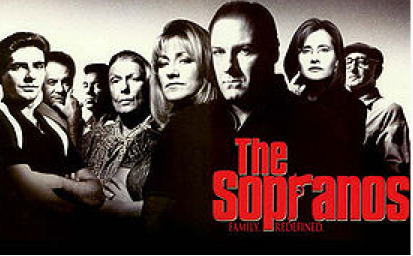
I’ve always been a fan of the movie marathon.
Used to be, you stacked a pile of DVDs next to the couch and hunkered down. Now with streaming on demand, digital distribution and handfuls of screens and streaming devices to choose from, digital entertainment has gotten way more interesting.
I started out just wanting to entertain myself over a busy six-week period of work and vacation and travel. Eighty-six episodes of this near genius series seemed the proper candidate.
It turned into an immersive experiment in how much streaming media has changed entertainment, trying out a bunch of devices, and whether socialization for time-shifted entertainment had made much headway in the last year.
The media acquisition part was simple. I had a bunch of episodes on DVD, some ripped media on my hard drive, and some shared files from friends but most of the series from the iTunes store. ITunes, the easiest access is a deal…$1.99 per episode. $2 dollars for an hour of The Sopranos is a bargain any way you look at it!
Watching whatever you want whenever is no longer a dream. A huge step forward and a meaningful stride towards the end of the cable company’s autocratic stranglehold over our evenings.
Watching wherever was a pleasant surprise. Choosing an Apple ecosystem makes this simple. Buy anywhere you have WiFi. Sync seamlessly back to your media hub and the hub remembers where you stopped watching.
Watching on my Macbook at the coffee shop, on the plane or propped up on a bunch of pillows in the hotel room worked as it should. If this is a two-person marathon, get yourself an audio splitter to drive two sets of earphones for the plane and train.
On the subway, the iPad was perfect. Running somewhere and can’t wait to till the evening to complete the episode, the iPhone does the trick.
And of course, getting the media from your laptop or server to the big screens in the house was the most important. AppleTV, while not devoid of issues, lets moving files to the big screen with AirPlay a snap. A single purpose system, limited but super functional and cost effective.
If you are going on vacation and know that your hotel TV has a HDMI plug, bringing your AppleTV along takes less room than your shaver and worth the trouble to continue the movie saga in a larger format.
Don’t discount the importance of support for even the simplest devices. With an Apple system, when things don’t work, you have the Genius Bars and moreso, their online tech support. Being able to have direct lines into someone in California who speaks English, cares, calls and emails you back is actually priceless. And having coverage on your laptop, covers your wireless and AppleTV devices as well.
All’s not perfect with the Apple system though.
Issues with the Apple system to watch out for:
-AppleTV, while restricted in use, inexpensive to acquire and easy to set up, just doesn’t always work. Disconnect the power and reboot is required 30% of the time. Really annoying but the reboot almost always does the trick.
-I upgraded from a MacBook Pro (huge hard drive) to MacBook Air (smaller) during the streamathon. Using Apple’s Time Machine to reimage the Air is a nightmare if the image of the Pro is bigger than the storage on the Air. Ended up removimg all the movie media to a storage brick, deleting it from the Pro, creating a smaller image for the Air then rebuilding. Two trips to the MacStore and a support call were necessary.
-iTunes has its own weird file dissonance and memory issues. When you move movies from your hard drive to a remote server, there is a lot of fussing as iTunes remembers only the first location of the media. A lot of deleting, moving and rebuilding is necessary. Another support call cured this.
What about Boxee?
This is the rub and the biggest issue for me. I’m a Boxee fan and Boxee Box user and believe in the system enough to patiently wait out the bug fixes and slow signing up of services like NetFlix. They have a vision of the future, they understand that the intersection of the web and the big screen requires a social fabric… and I’ve bought into it completely.
But, and this is mightily annoying, you can’t stream iTunes formatted media through the Boxee Box to the big screen. Media yes. Ripped movie files yes. iTunes purchased media no. Per Apple, Boxee is working on a fix to be compatible with iTunes. Till then, I’m either gong to have to make the choice or run two systems at home. I’m running both now.
What about social?
I participate in a number of social networks. And I share daily on my blog. I wanted to share my experiences with my networks while and about this rewatching of The Sopranos.
I posted on Facebook, shot out some still pics on Tumblr and Twitter but just posting that ‘I’m loving re-experiencing Season 2’, with a screen grab is really flat and uninteresting.
Or as Tony Soprano might say ” The true nature of social sharing has yet to reveal itself.”
There’s been a lot of early innovation in sharing around live broadcast events but little in the time-shifted media area. Check out my posts on socialTV @ appmarket.tv.
I’ve played around with GetGlue a bit but wasn’t drawn in. The right direction and we need a verticalized social network around film. But it feels flat and really early to me. If you have other sites or communities to try out, please let me know.
What’s missing is the ability to share clips, in video. Most copyrighted entertainment is not on YouTube and without this live scene-sharing component, I ended up taking this movie marathon ride mostly alone. If I had attended a conference, visited a vineyard in France or gone skiing for this amount of time, sharing with pictures and conversation would have been an ongoing activity. For something so immersive, so emotionally connected to myself like a movie or TV series, not being able to share the passion is a loss. This ability to share scenes from a movie, and as well being able to share snippets from a video blog are new frontiers to cross to make video a common language online.
Some early work on solving the scene sharing language was done by Socialbomb. They pioneered with HBO a way to share scenes with friends across a blue-ray connected network. Early. Visionary and bit funky but it allowed you to share snippets of scenes with friends on Facebook and Twitter. Something like that off of streamed media is beginning to approximate a social language for sharing movie experiences that make sense. My post on it here.
For all the issues, this era of streaming on demand on multiple screens for the mass market is firmly here. Cable with their antiquated vision of legislating what you watch and when and with outdated pricing models is fading away. We will all be glad when it is gone.
Social is the next frontier. It cropped up after the real-time web became the norm. It will crop up now that streaming live and time-shifted is moving into the mainstream. Keep an eye on Boxee to lead the charge on discovery that future.
And about The Sopranos. Well…eighty-six hours was too short and abrupt for me;) I already feel a sense of loss now that the streamathon is over.
Watching it in wherever and whenever I wanted created a delightful fog where I’d wake up wanting the next episode immediately. What a great show. And I must admit, that second time around, Season 6 held together a lot better. I’m sensing that I might have to pick out the top five episodes and spend another great afternoon re-wacthing.
Community and communications are two parts of a social whole.
The Facebook and Skype merger rumors are a perfect backdrop to relook at the Facebook community paradigm and how it will change with Skype as a partner.
To hundreds of millions of people, Facebook is the web. The first place they go in the morning and their principal source of news information. What’s remarkable is that while Facebook has defined social, you can’t really have a conversation there. Share of course; talk not much. This has been a missing link.
Today, on Facebook, we can post and comment but real conversations are not possible. Comment strings get moved to email or blog posts or a phone call or to a coffee shop for a meeting. Facebook is a check-in portal to see what’s going on. To do anything beyond sharing, you need to leave.
Facebook wants “To mesh communications and community more tightly together and add more tools to allow users to do so.” According to Kara Swisher who broke the merger story. Adding deeper communications capabilities in voice, text, and video are naturally the next step for Facebook and an evolving need for the ever growing group of people who run their lives from their profile pages.
Facebook fulfils that unique promise of a place to hang out at the intersection of our off and online lives where you share…and to many, create your life. It is the ‘homepage’ to the global and flattened mass market, the news source of reference to most, and fast becoming a merchant mall to most global brands. Google is where you go to work and look stuff up. Facebook is where you share it.
The merger would add a communications layer (Skype) to Facebook’s community network that makes sense on at least three levels:
1. Voice and text
Voice communications is a ‘gimme’ for the social graph. It’s been overdue in arriving.
Why say “I’ll call you”, jump off of Facebook…rather than make that call immediately? Having an integrated phone book built off of Facebook membership seems like a no brainer. Skype is great alone. Integrated without an extraneous Skype phonebook is considerably better.
No one likes the phone company. If we can make calls from our social homepage…we will. And since many of the Skype calls we make are international, this feature has the added benefit of accelerating international expansion to the Facebook network. And to the members, the more people on the network, the more useful it is.
Texting is an obvious missing link
Most notices from Facebook and my blog communities come through text. Texts are our rapid alert system from our networks.…”At the store.” “Meet you at the movies.” “Sign on to Facebook to chat.” Why have a one-way text pipe? On Facebook, on my phone…I would simply send text from within my profile…so would hundreds of millions more.
With Skype integrated, this issue is resolved…and of course, from a single Facebook address book. The sub 25 year-old, mini-millennium generation, would jump on this en masse as text on the phones is their principal communications jargon.
And with Skype’s partnership with Avaya (think VoIP PBS) it is possible to conceptualize a fan page as a business center with conference calling and call analytics. Powerful in its possibilities. Your fan page could become the portal into your VoIP-based, Facebook centric global BBS system.
2. Video chat and social video are the big promises that just haven’t materialized
Social video has been stumbling forward in fits and starts. I expected it sooner, but it has eluded the mass market’s momentum…so far that is.
Creative startups like Vpype, and even Facebook with video wall posts have tried to make it easy to use video as a new social form of communications. They’ve succeeded in making it easy; they’ve been unsuccessful so far in making this a mass market need…or want for that matter. All the pieces are there…cams, free usage, address books, but human behavior hasn’t made the leap.
Video Skype calling to friends and for business is already a well accepted behavior. Integrating this capability within the social graph from a branded and trusted provider like Skype could possibly push behavioral usage to fruition. Maybe we needed a communications brand to kick start this.
My sense is that if you add video Skype calling into the social ecosystem of Facebook, the dream of party-line video calling, interactive video presentations and distance learning just might take off. Social video may go from a good idea to an explosive reality…and drag along the work of start-ups who are verticalizing the video pipe for all of us, with apps from entertainment to business.
3. The Facebook social TV channel
Live conferences from Facebook corporate are streamed frequently, and free. Boring stuff but there is already the concept of TV within Facebook. It works pretty well actually on the small screen.
TV, the holy grail of home entertainment is a living room paradigm. Skype and Facebook are already built into millions of connected TVs and DVRs coming out this holiday season. Add Facebook Connect, Skype’s SDK, a connected TV broad footprint and Facebook may be the network for content consumption, including TV as a social medium. I’ve blogged on this here.
“Facebook is the equivalent for us to what TV was for marketers back in the 1960s. It’s an integral part of what we do now.” This comes from Davide Grasso, CMO from Nike. Facebook could well become the new social TV platform, where people watch and share video content in a brand new way.
A Skype and Facebook merger or partnership makes sense to me. Check out Om Malik’s piece on GigaOm for a positive view and Rick Aristotle Munarriz in The Motley Fool for an aggressive anti-merger point of view.
Regardless of the outcome of the Skype/Facebook saga, integration of community with communications will occur in the Facebook network and deepen a whole social reality that is greater than the sum of its community and communications parts.
With 45M internet-ready TVs shipping this year, there’s a minor land rush in process adapting the building blocks for community and social commerce from the web to the largescreen TV and communal setting in the living room.
There’s a lot of buzz around EBSNs (Event Based Social Networks), bridging web-proven viral loops and social commerce to live connected sporting events and network premieres. This is an obvious direction for flash community gatherings around live broadcasts but doesn’t address the majority of legacy media content available to viewers.
I visited with Scott Varlard (co-founder and CEO) and Philippe Pierre (CFO) of SocialBomb, a NY-based social technology company that is figuring out how to build community and bring social value to the mostly time-shifted reality of TV and webTV content. These guys are betting that brands and fans are both interested in social viewing and sharing around their favorite shows and movies.
SocialBomb, if you don’t know them, is the company that provided the community and technology platform for the HBO release of True Blood Season 2 Blu-ray DVD. This HBO release pioneered scene sharing, social incentives and on-big-screen controls for the Blue-ray release of the blockbuster hit series.
Scott and Pierre walked me through the demo…cool stuff to be able to easily pair your Blu-ray to Facebook and Twitter, share scenes and engage with a bunch of social incentivized activities. I’m a bit geeky and a huge True Blood fan so maybe I’m an easy sell for this but there is real potential here especially as this paradigm moves to streaming catalogs as well as DVD-based content.
This was a gutsy leap of faith for HBO to try this even as a ‘quiet launch’…big win for SocialBomb to pull it off so crisply. Connecting a DVD and TV to the Internet is still the domain of the few and DVDs, in my opinion, are a legacy format looking for some additional life. But…rumor is that fans liked it, scene sharing was very active (the coolest part) and both the fans and HBO have deemed this a success.
My take is that this is a small but important proof point on how to create community events around time-shifted content. DVDs are a second tier choice after streaming for many, but if this provides social proof in the small, hard-wired world of DVDs, it should work well for the mass market as a streamed, built in and easy to set up media in millions of living rooms this holiday season.
Let’s imagine the not so distant future.
Take what SocialBomb has done and apply it to streaming content and connected big screen TVs with, as well, 2nd and 3rd screens on the couch and mobile devices thrown in wherever they may be. And where every title on Netflix or Hulu or Boxee is able to connect to Facebook and Twitter with scene sharing, some social gaming and merchandizing built in. You can watch and rewatch and share media content in a social setting on any screen anytime.
This means that every time I view Godfather II or Hustle and Flow, or Entourage, I will be able to create a flash community event, share scenes and participate in extending my passion for movies, a particular movie or TV show down to the scene level. And most likely, this will inspire others to download and view and share as well.
I think there is something here…maybe not exactly as I’ve described it or precisely as SocialBomb is working with HBO. But something…significant.
People on the social graph, 500M on Facebook and millions on Twitter are hungry for content to share. On Facebook alone, an average user generates 90 pieces of shared content equaling 30B shared pieces monthly (mostly photos). With a tangible connected TV footprint coming and flash community capabilities being developed by SocialBomb and others, there will be a lot of scene sharing and social gaming around what we all do a lot of…that is watch TV. Scene clips could be the next step beyond photos as shareable objects. And everyone has movie and TV scenes that they would want to send as a video invitation to their friends and communities to join in the fun…or watch later.
This is also an innovative solution on how to take the real-time community of the social web and our social networks and connect it with time-shifted movies and TV and sports media that we love and watch and rewatch over and over again.
I can’t see this as any other than a win for everyone…including of course the content owners.
I’m very positive about a real-time social environment on the big screen around legacy content. Certainly more questions than answers exist today, but having all media content available all the time and platforms like Facebook or Twitter seamlessly tied into my ability to share…just makes sense.
Sharing in a Facebook-powered world is a common bond across all networks. Daily and by the billions of posts, we let each other know where we’ve checked in on Foursquare for the best expresso and where we are traveling to and the restaurants we frequent. It’s a natural (and significant) step forward to share movie and TV content we deeply identify with at a scene level, plugged into the social graph and shareable across all of our communities.
______________________________________________________
Thanks to my friend Jeff Blackman for introducing me to the SocialBomb team.

With the Hulu and GoogleTV announcements, the promise of WebTV on the big screen seems within grasp of most TV watchers…which is basically everyone.
I’m in the market to buy a really big screen, connected with web apps so I searched on Amazon, the discount sites and made a trip to Best Buy.
Oy!
The promise is there but the mess of misinformation, lack of clarity, fear of buying proprietary hardware and overall feeling that this is still a geek’s dream, unfortunately seems still true.
I jotted down my Commandments as a guideline to help make this convergence a mass-market love fest with the least amount of pain. This is my wish list.
Six Commandments for a better connected TV world
1. Make it easy
It’s just not easy to display what you see on your laptop on your big screen TV. Even with GoogleTV, that need is not going away as to get real access, cabling to your laptop or desktop will still be necessary.
TV manufacturers are still somewhat clueless and shopping for a solution today is as confusing as home theater has been for a decade.
2. Make it multi-screen
Laptop. iPad. Smartphone. Big screen. All need to work together and share content streams from the big content cloud in the sky.
We need to be able to seamlessly move from TV to laptop to iPad to phone to watch a synced, stored, time-shifted program.
We need to be able to do different things on different screens around the same content.
3. Content is king; networks are history
The web is the metaphor for connected TV, not the other way around.
I want to watch True Blood and Entourage, not be forced to buy HBO. Being muscled to purchase network packages is TV legacy; being able to acquire content I want is the promise of the web.
I think that most of us will pay for value as long as we are in control. This is the iTunes learning. I will buy individual songs even if they add up to more than the original album…and be happy because it is my choice.
4. Search is a given
Searching for video content needs to be as simple as searching for info on the web.
We are almost ten years into the world Google powered and it is part of our nature. We demand information overload and search efficiency for video content for everything from TV shows to movies to YouTube to cam clips.
5. Community and social are essential
Friend referrals. Intelligent Facebook info streams. Checking in. Sharing.
The first screen most people use every morning to check on the day is Facebook. And we share our experience on our Facebook walls, Twitter streams, Foursquare friend lists, Disqus comments, Tumblr communities.
This needs to extend to the content we watch. If access to the open web is there, smart startups like Tunerfish are already figuring this out. Facebook will certainly play here even if FacebookTV doesn’t become a reality.
6. Every hardware purchase needs to feel good
We are going to have to buy things:
-We need to feel good about buying hardware…you know, like the iPad. Costs a bit but empowers and enriches life.
-We don’t want to worry about buying the wrong platform. The Betacam/VHS conundrum is just not acceptable as a rerun.
There are certainly other asks but this is my wish list of ‘must haves’.
This is a work in progress…what would you add?
……………………………………………………………………….
For additional blog posts on social and connected TV, please click here and here.