Marketing has traditionally been thought of as a split discipline, with strategy driving the concept and direction, and execution and tactics charged with making things happen.
Nothing could be further from today’s reality than this.
The more you separate the strategy from the execution, the more you wall the actions from ideas that directed them, the more you lose touch with the dynamics of the market.
And the more you view marketing as anything less than an ongoing continuum with your customer, the more you are stacking the deck against you.
Something very intrinsic has changed that drives this.
In many ways the reality of today’s business and marketing world has occurred because it can. Not only the hierarchy of power, but people themselves have changed.
I don’t know which came first–the technology that empowered the change or the human drive for different market dynamics. Regardless, the result is a new landscape with the customer as the center of gravity for the commercial world.
Human behavior has evolved alongside the technology and the marketplace has reconfigured itself to the new world order. And marketing, that connecter has shifted focus toward process of discovery and communications with the customer. In fact, marketing is that process.
I had an email exchange with a University marketing professor after I wrote my “Customers rule” post last week. This sums up his stance:
While customers have more power to vote with their dollars because of the Internet, it’s just an enabling technology and not a paradigm shift. There were customer centric companies before the Internet.
We are on opposite sides of this discussion. Not about the value of the customer but about the depth of change in today’s commercial ecosytem.
Undeniably, the tools are powerful and enabling but I believe that a basic human and commercial shift has occurred. This is not merely a continuum of core business values, but something new and more profound.
The real-time web and social nets have enabled new behaviors to arise and the social landscape has changed with them. With freedom of choice, personal power of communications and a readily available global audience, the result is a different commercial and (even) political world.
Communications and social tools are not the change–how we use them and how that has affected us is. This is a paradigm shift, not just faster cars on the same roads with the same rules.
Think about the check-in space and the social nets.
Have check-ins exploded because we have phones and are always connected or because it tapped into a behavior looking for a platform? Or the incessant need for sharing on social nets. Is Twitter or Facebook the catalyst? Or was human behavior ready to share and brand itself and the platform enabled that?
Things changed because they could, because a new platform of possibility empowered by technology but inhabited by a customer-centric world has evolved.
I believe that this is driven by the behavior not the tools. And this is not a subtle distinction, especially as it affects how we market to and discover our customers.
Great customer-centric companies like Nordstrom who invented the ‘no questions asked return’ policy in the 90s changed the rules of business dramatically. They realized that most people were honest and only returned items if they really had to. But they are not like Naked Wines , a company that opens up the supply chain of wine production and sales to the community along with a no questions asked, no cost mail-in returns policy. Each fervently believes in the customer. Each is a product of its times and the times have changed.
Certainly there is a different model for every company.
Groupon employs the social net driver to power its viral loop to acquire customers, a new twist on email marketing selling local products on a global social platform. Lululemon created a brand that drove fierce customer loyalty around the intersection of street gear and yoga clothes and good vibrations by local word of mouth (pushed by social nets) with hyper friendly in store policies, all without an online component.
But for each, a new culture fueled by new technology served a demand of the customer to sold to in a certain way–their way. Great companies figure that out. The models are endless with flexible technology as a servant to design social and personal commerce.
So what does this have to do with the traditional polarity of strategy and tactics in marketing?
Everything I think.
What is the goal of all businesses?
- At its simplest, to find a way to bring value to your customers. Certainly you need to do this is in a cost-effective, margin-positive way but without customer value all the rest is moot.
What is the goal of marketing?
- At its core, building that value chain between customer and company.
How does it get done?
- An ongoing, dynamically informed process. Smart iterative execution.
Whether you are an early stage startup with a new product or a more mature company looking to extend the line, the process of discovery will be dynamic for both. Not the same of course but dynamic execution nonetheless.
The process of discovering what you should do is tied to the idea you set out to quantify. Each will be unique. Each will be dynamic. Each will be iterative.
Traditionalist marketers will state that this is how it is always done. They are wrong.
Traditionalists will counter that this is a non-directed process. Not so.
Budgets, criteria for measuring success, timelines and resources all are essential. Just that finding the right process is the initial goal. Discovery is the focus and the customer is the group that will provide the information.
This change is empowering and the surge in entrepreneurship speaks to it.
Today you can come up with an idea, create an online space, gather those with like minds and establish a global community of people to vet your ideas with.
Today you can build a sizable community with only your friends and their friends and test ideas in a invitation only space before you ever go to market.
Today you can start with your existent business and test an extension of services or products without a public launch, with mitigated risk to your core business and gather data to make a decision with.
But this is hard to do, old paradigm or new. It has always has been a herculean task to build a new brand or a successful business or create a market out of an idea. Still is. Just that the process is different and the skills to succeed changed. And the barriers to success less about resources and more about ingenuity and early market creation.
I believe in market magic. In that ineffable ‘thing’ that happens when value and customer connect. When the chasm gets crossed. When ideas become a market reality.
Everything is different but somehow the magic is more accessible under the new order. Sure there is more noise to cut through. More competition for everything but with customer values as the clear target and social nets as marketing’s road to travel, directionally everything makes sense.
Marketing is top of mind for everyone lately…and it’s not a love fest.
This love/hate maelstrom started in February with Fred Wilson’s posts on Marketing. The three-part series generated over a thousand comments and a treasure trove of great ideas, voiced anxieties, articulate but defensive posturing and really honest queries by a host of entrepreneurs striving for just one thing…success.
Nothing could make me happier than to see this discussion raised. Like all discussions that become viral, the need was there long before the event triggered it.
Large company or start-up, the need for businesses to connect with their market is the only quotient of success. And while the methods change as the tools change as the business world evolves, the goals remain the same regardless of the tech or behavioral trends of the day.
And marketing is the architect of that connection, that capability that creates the value chain between company value and customer belief. And that’s why this discussion is so surprising…and so important.
The 1000+ comments responding to Fred’s posts, speak to a core misunderstanding and mistrust—yes, a dislike for what marketing does. I responded to scores of comments on his blog, redefining, clarifying, taking it to heart that what I do–what I truly love doing, was on trial.
But it pays to listen when the marketplace speaks, especially one as broad, as diverse, as successful as the one at avc.com. Such profound misalignment over something so basic and critical to company growth begs further thought.
This debate surfaced again this week with a post on “Why does Fred Wilson hate marketing?” by Brian Morrissey, Editor in Chief of Digiday, a marketing blog I follow. Brian states that there is a discrepancy between the world of VCs and the “…staid marketing world of selling more stuff for clients” that the rest of world worries about. These are Brian’s words about what marketing does today.
This is getting to the rub of the whole matter.
If marketers aren’t clear, the market is bound to be confused. How Brian defines marketing is out of whack with the times.
Marketing is what it has always been…the connector between product and market, between brand and belief, between the vision of an early visionary product and its first enthusiasts, and a core element of a product’s potential of finding support, distribution and a following.
The discrepancy between old-school methods and new tools is more profound now. The real-time web and huge social nets have changed everything dramatically. How we build products, find communities, discover pricing and build an ecosystem of support are completely new and changing daily. How companies connect with their customers is equally done with a brand new, not yet written playbook.
This is indisputable.
But it appears that with all the noise from market pundits on the uses of social tools, the core value of marketing has not translated to the realities of today’s business. That appears to be what the market, our customers, the commenters in Fred’s blog are telling us.
The fact that someone as savvy as Brian Morrissey is defining marketing as a loud shouting discipline from a time long gone is a true indication of the breadth of the chasm between what companies need and their perception of what marketing can offer.
Fred’s words, which he knows I disagree with, are not talking about what marketing does but how it is positioned and presented in the face of today’s socially driven world. I talk to companies every day and he is not the only one that is tired of seeing advertising positioned as the answer, budget depleting PR proposals presented to bootstrapped startups and paying for special teams to come in and save the day.
We as marketing pros are complicit here. If the thousands of smart entrepreneurs who read Fred’s blog don’t get that marketing isn’t just advertising nor big budget agencies and a crutial key to a company’s early success…hey, this our problem to be fixed and an opportunity for all sides.
Pushing old school definitions of big brand campaigns only fuels the misunderstanding. And telling those with influence like Fred and the readers of the blog they just don’t get it is like yelling at your customers if they don’t like your campaign or understand your messaging. A bit ridiculous. Certainly counterproductive.
The right path–as always– is to listen to the market.
One of the most basic rules of marketing is to make the very people whose support you most need, integral and part of the process. This could be the sales force for a lead gen program. The product group when you need to build viral hooks into the product itself. Or even the most basic, embracing your early enthusiasts on a dynamic platform to get feedback and spread the word.
Or, in this case, the world of entrepreneurs and their funders who have somehow lost touch with the value that market building thinking brings to the table.
The truth as I see it, is that while big-spend shouting and noisy campaigns have never been more purposeless, true marketing has never been more key.
Marketing in the hands of the best and there are great marketers out there today is in concert with the iterative and dynamic process of how we build product today. In fact, many of the name brand serial entrepreneurs are just that, great marketers who can manage to a P & L.
Marketing is deep in craft. The science of traffic is essential to employ (SEO and SEM). The craft of connecting a story to influencers (PR) certainly has its place. The logistical brilliance to get the impossible done or that just really smart promo at SXSW or during the marathon are all tools on the marketing belt. But…these categories of skill sets by necessity evolve to suit the times and the market, not bolted on nor grandfathered in. Or worse, presented as a must have at prices that only big brands can afford.
Every startup and every product and every community is discovered through a marketing sensibility. With literally millions of solutions and everyone globally connected online, the possibilities for massive success are dampened only by the challenges of being discovered and connecting with your market.
This wildly viral debate about marketing is a loud wake up call. And a huge opportunity.
It’s a wake up call to marketing thinkers and professionals and brilliant tacticians to pay attention. Because the market is telling them they are not buying an old school approach to a new world order of business.
It’s also a wakeup call that there is huge opportunity for marketers and entrepreneurs, as well as larger companies to figure all of this out. To demystify some of the social media mumbo jumbo, to imbue strategic market thinking with dynamic tactical excellence.
And mostly for marketing and business and product people to partner at a core level to figure out how connect value with its market.
There is no winning the argument of what marketing is or does. There is only changing the discussion to fix the problem.

New York is taking a page out of the mobile gaming and check-in space playbook to solve some large public information access problems.
The city’s challenge is to close the information gap between the millions of citizens on the street and the thousands of construction projects that impact daily city life. Simple problem; not a simple solution.
Most QR code-based projects fall prey to the chicken-and-egg conundrum. Snapping a code is easy but the information received is still incomplete, usually being developed by the users themselves. But in New York, the pieces, at least in concept are lining up. Public information is there but buried in public records. A population on foot, carrying smartphones are demanding the info. The QR code with free reader apps is the theoretical missing link to tie the process together.
An interesting if geeky article, Use of Quick Response (QR) Codes on Permits, on Mayor Bloomberg’s website opened my eyes to this QR project. It popped up in my Facebook feed the other day thanks to the inveterate NY watcher @jenxo.
Here’s the situation:
New Yorkers live in the world’s largest and most chaotic construction site. Everywhere something is being built, fixed, redone, or scaffolded. This is life since the first settlers landed on the island and started building and it continues daily. It’s noisy and messy and incessant and indecipherable.
The city needs to connect the people with the data on the fly. The numbers are large–179,00 construction permits and 33,00 after-hour variances (in 2010) for the 975,000 buildings in NYC. And millions of people on the streets and roads. Using smartphones with QR readers as the solution is a profound idea. A complex project that if it works well, breaks new ground in making real-time web apps with IR readers a solution for large scale urban information projects.
Once again, dense urban cities are the sandbox for new uses of social and mobile experiments with the web.
This is how it is designed to work:
Starting in 2013, every construction site in the city will have a QR code (like above) posted. Readable through a handful of fee apps available for smartphones, it ties into the database of construction permits for all activity in the city.
You want to know who owns the building, what is being done and the schedule for completion?
Snap the QR code.
Interested in the name, contact information, license details of the designer, architect and contractor?
Snap the QR code.
Want to know if the builder has a variance that allows horrible noisy scraping noises on Sunday morning?
Snap the QR code and find out.
Want to know why the building looks much larger than the one the community approved?
Snap the code and check out the variances.
This is a really quite cool design. This is not a new technology looking for a reason to be. This is a mobile app with a reader solving a large scale problem.
The idea is a derivation of what we all do with check-ins with FourSquare or playing mobile games. The city is adapting consumer entertainment design to democratize data access in this dense and complex urban area. The result, if it works, will be a great proof point for the humanizing capabilities of the web and technology as a tool to really better life.
Extending the paradigm if it works:
Once the infrastructure is in place, the endpoint QR codes can do almost anything. The article spoke of QR codes on public vehicles and garbage trucks linked to educational videos on YouTube rolling out now. There are endless dots of data and information to be connected in New York…and I bet most urban centers.
Logical extensions to the construction permit concept require few leaps of imagination. Restaurant and clubs applying for liquor licenses, comment sites for taxi cabs and health certificates for street vendors. New York is a complex place. Mobile technology just may be a panacea to make it a bit more understandable and arm the citizen on the street with information to be in control of their neighborhoods.
For me personally, taking great mobile apps like the MoMa iPhone app and adding a QR code is an obvious must-do for all museums and public buildings. I would love to be able to snap a code and get architectural and historical information on buildings and monuments throughout the boroughs.
QR code based solutions, I would love to see:
- QR codes on every one of the 60,000 SKUs of wine sold in the city so I can remember what I drank and find info in the store while I’m shopping or sipping at a wine bar
- QR codes on food labels and farmer market stands (especially those labeled as Organic) to search information in real time while buying groceries
- QR codes on conference badges so I know who I am talking to without asking
- QR codes on pet labels to identify owners and their vets so lost pets can be tracked to the owner or taken to a vet who knows them
Wrapping up:
There are numerous mobile apps that help us navigate our cities, be more productive and know when the next subway train is approaching. Adding the QR code with direct access to public data puts the consumer in control. This was always the dream of the social web. With QR codes and no-cost scanners and smartphones, it’s starting to come together, at least in theory.
Certainly New York is not the only city which has latched onto the QR code as a possible answer for mobile public information access. The information gap is everywhere.
If you have examples of other QR based apps or plans, I’m interested. Please share in the comments.
Do you ever wonder why everyone posting on your Facebook wall is happy or tan and interesting? Always eating at fabulous restaurants…or in my case only drinking the very best wine?
Welcome to the ‘other’ social filter.
Social information filters allow us to see what interests us, find more relevant information quicker and connect to people or causes of like mind effortlessly. They are core to the value of the social graph and of course Facebook.
They are magic of sorts. We hang around Facebook because it is relevant in a world we define.
But we also feel at home on Facebook because we are the architects of our physical identity which is inextricably tied to our social identity. We filter and control our physical image and persona. It’s human nature and part of socialization to look our best. Facebook understands this and let’s us easily architect the info we show. Everyone of us deletes posts from our wall that we don’t like.
We can “control the lighting” if you will on how we are perceived.
In an interesting post by Om Malik yesterday, “Now Starring You, in a Movie about You” talks about what he calls MeTV that ties into this perfectly:
‘I always thought millions of us were living inside our own weird version of reality television. But reality television can be ugly and sometimes too stark. Movies are curated, edited and have a sense of polish. That is one of the main reasons why Ratcliff (developer of the app“100 Cameras and I”) believes apps like his and Hisptamatic are selling briskly on the iTunes store. “The filters can turn ordinary into extraordinary.”
Turning the “ordinary into the extraordinary” is a potent phrase. This is about the intersection of identity management and personal fashion on our Facebook walls and blogs. It’s naturally what people do on Facebook, at a party, in a meeting and in life.
Om is mostly talking about photos and points to the massive growth of Instagram as a photo filter as an example. He is talking about images and filters…I’m thinking about live social video and chat.
I’ve been an enthusiast for social video for as long as video has been pushed around online.
All the infrastructure barriers to social video are mostly gone. Cheap bandwidth and free storage abound. Handheld mobile play and capture. And we have Facebook and Twitter identities as the social glue to tie us all together in a world where sharing is a behavioral norm.
Despite a host of interesting early products and a focus on the less self-conscious Y generation, social video and chat are still a juicy promise but a very early reality.
Even I, with all my passion for the medium, infrequently use any of the services except Skype for international business calls. Something has been missing.
I think Om, by identifying the ‘why’ of the boom in photo filters has found at least one important key to the puzzle. Social video chat feels and acts and looks like a dorm room video cam. Home-movie like. Awkward and overly self-conscious and glaring.
This is a filterless, uncontrolled reality. From childhood on we look in the mirror to see how others see us. Suspending the ability to control this seems antithetical to human nature.
For a long time I believed that the social and video chat market was waiting for a behavioral change in people to share more visually. I now feel the core human tenet of filtering our image to control our persona and identity may be the missing link.
Adding filters to video is not easy. It’s simpler for a B roll edit or filter, very challenging for a live stream. That’s why broadcast studios are what they are…expensive and complex and few.
To borrow a few words from Om’s terrific quote, in order for the ordinary to become extraordinary, we need to filter and stylize the video stream. And in order for that to be part of the social graph, everyone needs to be able to do this on the fly.
Seems possible in the face of all the other barriers that have been erased.
On the heels of Om’s post, the media was abuzz yesterday with the launch of SocialEyes, a well-funded startup with Rob Glaser of Microsoft and RealNetworks fame as the Chairman and product guru Rob Williams as CEO.
Om’s ideas and Glaser’s new company connect in an interesting way.
Rob Glaser understands the intersection of digital and audio video with the mass market better than most. And he has the chutzpah and connections and vision that few in this segment have. And first glimpses of the product coming out of Demo yesterday are interesting. SocialEyes looks like it has separated itself from the crowd and has learned from the companies that pioneered the space.
I believe that social video is the next communication’s frontier and have been blogging on it almost since the beginning. I want SocialEyes to get it right. I want someone to leap the chasm and unlock the gate for social video communications. Rob Williams, a really smart product guy, has mashed up some cool features. Adding B roll and content feeds with what looks like curated publishing channel on YouTube creates a semblance of dashboard and video publishing control. He knows that the market needs something more.
My only question is about you and me and how we can control the filters of our appearance, which is our social identity online.
Call this segment video chat or video conferencing or social video…it’s a lit image of ourselves nonetheless for all to see during the event and shared across the web in snippets of your live image.
The utility of live chat and the fun of connecting live with friends and partners is very compelling. My sense is that the more you can controlling the lighting and airbrush the image so we look like ourselves, the faster the mass market will grab this and make it their own. All the other components are in place, just the filters have been missing.
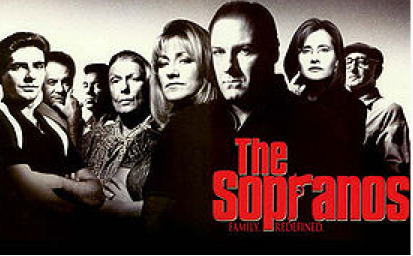
I’ve always been a fan of the movie marathon.
Used to be, you stacked a pile of DVDs next to the couch and hunkered down. Now with streaming on demand, digital distribution and handfuls of screens and streaming devices to choose from, digital entertainment has gotten way more interesting.
I started out just wanting to entertain myself over a busy six-week period of work and vacation and travel. Eighty-six episodes of this near genius series seemed the proper candidate.
It turned into an immersive experiment in how much streaming media has changed entertainment, trying out a bunch of devices, and whether socialization for time-shifted entertainment had made much headway in the last year.
The media acquisition part was simple. I had a bunch of episodes on DVD, some ripped media on my hard drive, and some shared files from friends but most of the series from the iTunes store. ITunes, the easiest access is a deal…$1.99 per episode. $2 dollars for an hour of The Sopranos is a bargain any way you look at it!
Watching whatever you want whenever is no longer a dream. A huge step forward and a meaningful stride towards the end of the cable company’s autocratic stranglehold over our evenings.
Watching wherever was a pleasant surprise. Choosing an Apple ecosystem makes this simple. Buy anywhere you have WiFi. Sync seamlessly back to your media hub and the hub remembers where you stopped watching.
Watching on my Macbook at the coffee shop, on the plane or propped up on a bunch of pillows in the hotel room worked as it should. If this is a two-person marathon, get yourself an audio splitter to drive two sets of earphones for the plane and train.
On the subway, the iPad was perfect. Running somewhere and can’t wait to till the evening to complete the episode, the iPhone does the trick.
And of course, getting the media from your laptop or server to the big screens in the house was the most important. AppleTV, while not devoid of issues, lets moving files to the big screen with AirPlay a snap. A single purpose system, limited but super functional and cost effective.
If you are going on vacation and know that your hotel TV has a HDMI plug, bringing your AppleTV along takes less room than your shaver and worth the trouble to continue the movie saga in a larger format.
Don’t discount the importance of support for even the simplest devices. With an Apple system, when things don’t work, you have the Genius Bars and moreso, their online tech support. Being able to have direct lines into someone in California who speaks English, cares, calls and emails you back is actually priceless. And having coverage on your laptop, covers your wireless and AppleTV devices as well.
All’s not perfect with the Apple system though.
Issues with the Apple system to watch out for:
-AppleTV, while restricted in use, inexpensive to acquire and easy to set up, just doesn’t always work. Disconnect the power and reboot is required 30% of the time. Really annoying but the reboot almost always does the trick.
-I upgraded from a MacBook Pro (huge hard drive) to MacBook Air (smaller) during the streamathon. Using Apple’s Time Machine to reimage the Air is a nightmare if the image of the Pro is bigger than the storage on the Air. Ended up removimg all the movie media to a storage brick, deleting it from the Pro, creating a smaller image for the Air then rebuilding. Two trips to the MacStore and a support call were necessary.
-iTunes has its own weird file dissonance and memory issues. When you move movies from your hard drive to a remote server, there is a lot of fussing as iTunes remembers only the first location of the media. A lot of deleting, moving and rebuilding is necessary. Another support call cured this.
What about Boxee?
This is the rub and the biggest issue for me. I’m a Boxee fan and Boxee Box user and believe in the system enough to patiently wait out the bug fixes and slow signing up of services like NetFlix. They have a vision of the future, they understand that the intersection of the web and the big screen requires a social fabric… and I’ve bought into it completely.
But, and this is mightily annoying, you can’t stream iTunes formatted media through the Boxee Box to the big screen. Media yes. Ripped movie files yes. iTunes purchased media no. Per Apple, Boxee is working on a fix to be compatible with iTunes. Till then, I’m either gong to have to make the choice or run two systems at home. I’m running both now.
What about social?
I participate in a number of social networks. And I share daily on my blog. I wanted to share my experiences with my networks while and about this rewatching of The Sopranos.
I posted on Facebook, shot out some still pics on Tumblr and Twitter but just posting that ‘I’m loving re-experiencing Season 2’, with a screen grab is really flat and uninteresting.
Or as Tony Soprano might say ” The true nature of social sharing has yet to reveal itself.”
There’s been a lot of early innovation in sharing around live broadcast events but little in the time-shifted media area. Check out my posts on socialTV @ appmarket.tv.
I’ve played around with GetGlue a bit but wasn’t drawn in. The right direction and we need a verticalized social network around film. But it feels flat and really early to me. If you have other sites or communities to try out, please let me know.
What’s missing is the ability to share clips, in video. Most copyrighted entertainment is not on YouTube and without this live scene-sharing component, I ended up taking this movie marathon ride mostly alone. If I had attended a conference, visited a vineyard in France or gone skiing for this amount of time, sharing with pictures and conversation would have been an ongoing activity. For something so immersive, so emotionally connected to myself like a movie or TV series, not being able to share the passion is a loss. This ability to share scenes from a movie, and as well being able to share snippets from a video blog are new frontiers to cross to make video a common language online.
Some early work on solving the scene sharing language was done by Socialbomb. They pioneered with HBO a way to share scenes with friends across a blue-ray connected network. Early. Visionary and bit funky but it allowed you to share snippets of scenes with friends on Facebook and Twitter. Something like that off of streamed media is beginning to approximate a social language for sharing movie experiences that make sense. My post on it here.
For all the issues, this era of streaming on demand on multiple screens for the mass market is firmly here. Cable with their antiquated vision of legislating what you watch and when and with outdated pricing models is fading away. We will all be glad when it is gone.
Social is the next frontier. It cropped up after the real-time web became the norm. It will crop up now that streaming live and time-shifted is moving into the mainstream. Keep an eye on Boxee to lead the charge on discovery that future.
And about The Sopranos. Well…eighty-six hours was too short and abrupt for me;) I already feel a sense of loss now that the streamathon is over.
Watching it in wherever and whenever I wanted created a delightful fog where I’d wake up wanting the next episode immediately. What a great show. And I must admit, that second time around, Season 6 held together a lot better. I’m sensing that I might have to pick out the top five episodes and spend another great afternoon re-wacthing.