I use the same headline every year for my Thanksgiving post.
And every year there are more quality natural wines, from more diverse places, made by producers I’ve never drank before, showing new innovations and at better prices.
There has simply never been a better time in history to be alive and be a lover of wine. We are so very lucky in this respect.
This year with the help of my good friends Ariana from Chambers Street Wines and Christy from Frankly Wines, I think I nailed it.
Truly outstanding wines from Oregon, Quebec, France, Sicily and Spain. With a splash of mead thrown in.
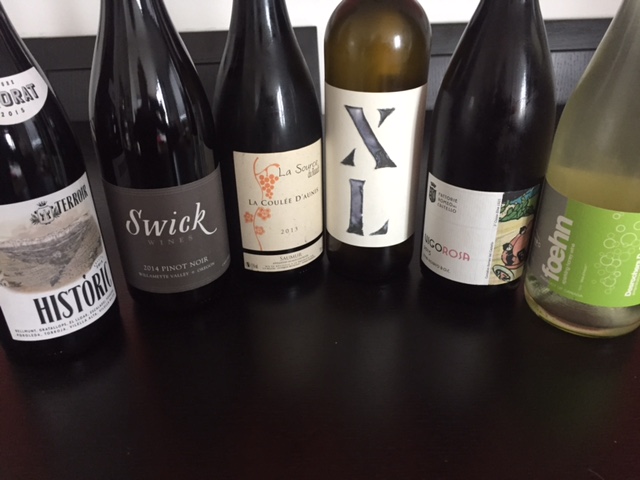
Here’s the selection:
Terroir Historic (Terroir Al Límit) 2015 Priorat Negre ($28.99)
The crowd favorite red this holiday.
Dominik Huber is a truly talented German winemaker making restrained natural reds and whites in the Priorat, in Spain.
Much less ripe that you’d expect, significantly reduced alcohol and making not a wine of place, but a wine of region. This bottle is a blend from a scattering of organic plots with telltale llicorella clay and alluvial soils of the Priorat.
Tightly wound acids, brambly herbal berries. As Ariana Rolich put it well, ‘a Priorat for minimalists’.
To me the bottle simply says Drink Me now!
Partida Creus 2015 Catalunya Massís de Bonastre Xarello ($29.99)
This was the crowd favorite white. Basically vanished in a moment.
We know the grape Xarello from Spanish Cavas, but was new2me as a still wine.
This is simply a head-nodding beautiful bottle–mineral rich, bright, citrus, nteresting and juicy at the same time.
This one is naturally a bit wild, no added SO2, and six months on the lees. Some time on the skins is obvious through the grip of the tannins and bouquet.
I’m buying a magnum for the Chanukah gathering of the same group.
Buy and try this if you can find it.
Swick Wines 2014 Willamette Valley Pinot Noir ($27.99)
Joe Swick and I have spoken in depth about natural wine. He is outspoken, so very wine savvy, an uncompromising purist and 5th generation Oregonian from Portland. And need I mention, a true talent.
This bottle is a silky, textured and brambly Pinot, sourced from several cooler Willamette Valley sites (Cancilla, Medici, and Fairsing vineyards). A light touch with a satisfying palate that leaves you with berries on the mouth, savory in the nose, and just satisfying all over.
I’ve been drinking this bottle over and over since its release.
Feels just right each time.
Joe nailed it with this one.
Romeo del Castello 2015 Etna Rosato Vigorosa ($28)
I had the pleasure of meeting Rosanna Romeo and her daughter Chiara Vigo when in Etna a number of years ago.
I remember well their story of how the eruption of Mt. Etna in 1981 reduce 60 hectares of vines to 14 and left huge lava beds on their property.
This wine speaks to me of my love of Etna and my pining to return.
That unique taste that even in a rose is vibrant and savory, bright and acidic with a crisp finish and a spice to the aftertaste that simply won’t end.
Delicious bottle that was a perfect complement to the others at the table. I kept this one near to me the entire meal.
Source du Ruault 2013 Saumur Blanc “La Coulee d’ Aunis” ($17)
I knew this wine the least prior to drinking it. Quite a discovery.
Comes from a tiny one-hectare parcel of Chenin Blanc of almost entirely Turounien Limestone in the Loire Valley.
Perfect pre-meal, hanging around nibbling while cooking and chatting. It is lean, mineral with a silky suppleness to it that that drew me in immediately.
A bit too austere for the group, but I grabbed and nursed this one myself.
A discovery and a huge bargain at $17.
I have another one in the fridge for for some saw goat cheese I picked up at the market today.
Desrochers–Foehn Ferme Apicole Honey Wine ($37)
This is a completely natural Pet Nat mead from Northern Quebec.
Unfiltered. Unfined. No added SO2 with the yeasts cultivated from the pollens collected from the same bees that brought in the honey for this bottle.
I met the winemaker and apiarist at my panel at the Raw Fair a few weeks ago and tracked this bottle down.
As intriguing as it is delicious. Clearly not a wine made from grapes and as a beekeeper years ago, I could taste the honey in the aftertaste though it is completely dry and magically satisfying.
Super natural in every way. Twelve months on the lees, non dosage, nothing added.
Not only does this winemaker have real talent but he is certainly part of a new generation that will I am certain redefine what natural means to all of us.
Try this or the other wines linked to in the post of my panel.
I guarantee you will not be disappointed.
To close
Been a while since I threw together a post on what I’ve been drinking, rather than spit out bottle pics on Instagram
This was more fun and more useful.
I hope you enjoyed it. I am certain you will enjoy the wine!
Most people head to Mexico and drink Mojitas.
We mixed up a few, but for our annual family Spring Break in Tulum, it’s about wine and the natural best at that.
Tulum is all about being in the zone. Wonderful, refreshing and not-your-standard fare is the rule.
The setting:
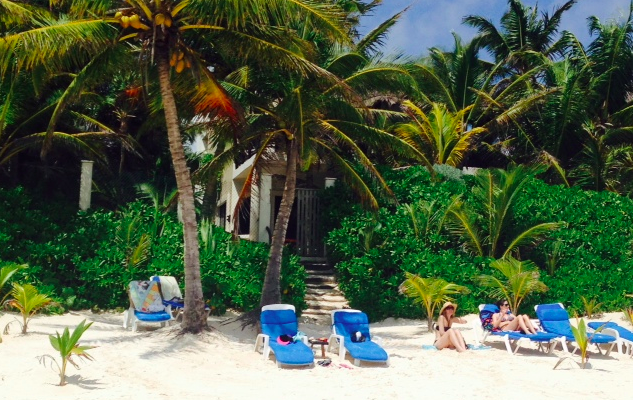 Hot and humid to the max. Hammocks under the palms. Fish and more fish on the grill. Tacos of every sort. Cerviche and guacamole every day.
Basically anything you can wrap in a banana leave and put in grilled flatbread.
The wine:
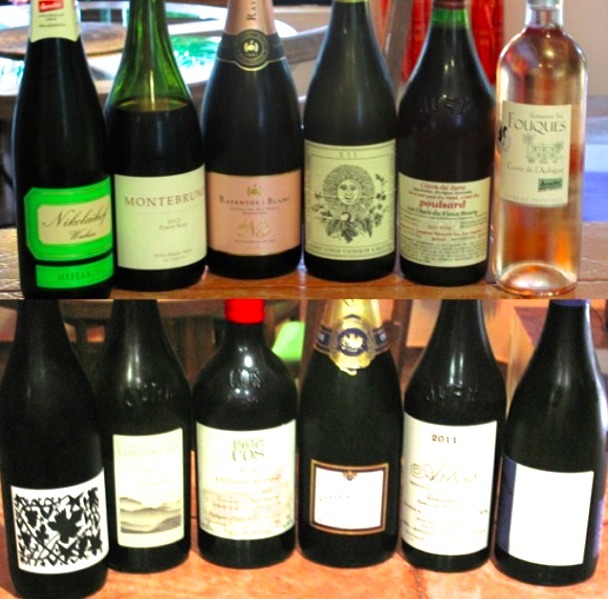
 Interesting is the rule. Delicious is the grade.
This year we nailed it. The most diverse and varied, the most economical and the most natural.
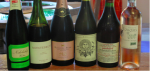 Best twelve beach pack ever.
I’ll recap with an eye towards choices over time. They are all winners.
–>Three choices from the Jura
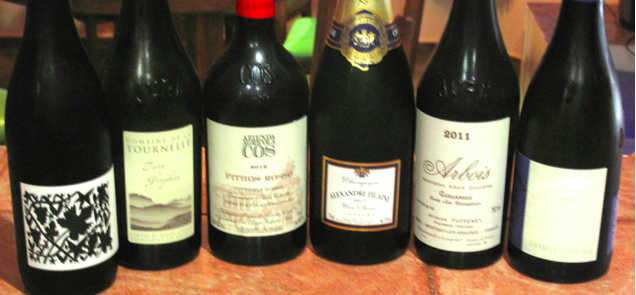
Evelyne and Pascal Clairet from Domaine de la Tournelle in Arbois stole the show with their 2010 Terre de Gryphées Chardonnay ($27). Those who say that the Jura is an acquired taste are just plain wrong.
This chard is as unique and terroir-expressive as it is delicious. Wine geek or no, this is a head nodder with undeniable satisfaction.
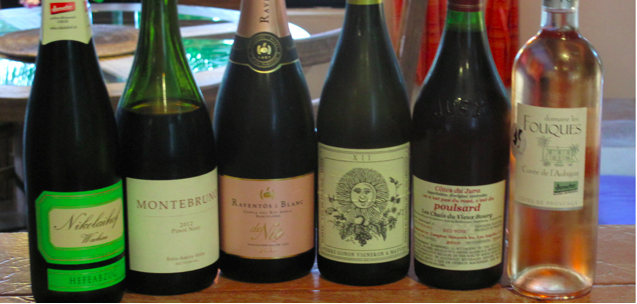
Second year running on the Poulsard side was Ludwig Bindernagel’s 2010 Les Chais du Vieux Bourg ($34). This German newcomer to the Jura just nails it. Light with a rich body, layered and lovely, a larger than life bouquet for such a delicate wine.
Puffeney made the cut this trip. His 2011 Les Berangeres Trousseau ($35) was the third Jura bottle. The family loved it. I found it a bit austere with a hard edge but quaffable nonetheless.
–>A touch of Sicily and anfora with Giusto Occhipinti’s COS Pithos
COS makes the trek yearly. The 2012 COS Pithos IGT ($31) Cerrasuolo Frappato/Nero D’Avola blend was as expected–delicious and unassuming.
Lightly chilled, delicate and satisfying are its hallmarks. Giusto is the first winemaker I ever tasted that fermented in Anfora and a personal hero and friend. This wine nails it in just about every category
–>Gruner from Nikolaihof is as good as it gets
I love this vineyard. Natural. Bio-D. Ancient. As crisp and unique a Gruner Veltliner as you can find. This year (the third appearance of Nikolaihof) we switched to the 2012 Hefeabzug Gruner Veltliner ($25). A winner.
–>More bubbles make the cut
Bubbles are an occasion in their own right. Two bottles made the trip with us.
The first Cava to cross the border was the 2011 Raventos i Blanc de Nit Rose Brut Conca Del Riu Anoia ($22). Elegant, smokey citrus from the Monastrell grape. We had it with a breakfast/brunch on the first morning. Yum!
The Filaine NV Brut ler Cru Damery Cuvee Speciale ($49) was the priciest of the bottles and a special treat. Creamy and classical. A Pinot Noir/ Chardonnay/ Pinot Meunier blend of 2009 and 2010 grapes was oh so ripe and finely moused and bubbly crisp. This was brought for a birthday and it crushed expectations.
–>A bit of Alpine Savoie at the Mexican seaside
I’ve fallen hard to this region, the producers and varietals. I could have brought a half case of just these whites.
I tasted with Gonon recently and his 2012 Vin de France Chasselas Vieilles Vignes ($25) is well—a dream. Subtle and herbal with smacks of fruit. I so love this bottle. So did everyone.
I’m a long-term Belluard fan. His 2012 Grandes Jorasses Altesse ($34) is fresh, mineral, crips, light and delicious. I had sent this bottle as presents earlier in the year. It’s a family tradition already.
Next to the Jura–in fact Savoie is Jura adjacent–this is fast becoming my favorite region.
–>New world naturalists make the trip
A first for this vacations–an Oregon Pinot Noir and a California Grenache/Mourvedre blend.
I tasted the 2009 Montebruno Eola-Amity Hills Pinot Noir ($25) with the winemaker Joe Pedicini earlier in the year. Bio-D, a light effervescence and deep flavor are its traits. Served lightly chilled in water glasses on the terrace overlooking the sea was a crowd pleaser.
Hank Beckmyer from La Clarine Farms is a favorite of mine for the brilliance and ease of his wines. A Grenache and Morvedre blend at km 9.2 in Tulum? I say, hell yes!
The 2012 Sierra Josephine & Mariposa ($25) is a beautifully balanced and structured, tannin-laden bottle. I did chill it slightly and with some home made Quesadillas and Cerviche, it was a killer.
Not a hint of sulfur added in these. Not a touch of funk. Freaking lovely natural wines!
–>Wrapping up with a Cotes de Provence Rose
From the selections of my friend David Lillie was a Les Fouques 2012 Aubigue Rose ($13!).
This blend of Cinsault, Grenache, Syrah, Cabernet Sauvignon, is almost pale white, shot with pepper, light on the palate, dreamy on the nose and perfect on the hammock.
Small producers all.
These wines are very small productions and go in and out of stock. Some are available at Chambers Street Wines and online through other small specialty shops. Shop the producer if not the vintage.
I will wager a free bottle on me for long-term readers that these will delight.
A thank you to my friends Sophie Barrett and Ariana Rolich of Chambers Street Wines for making the process of choosing almost equal to the drinking.
Some photos to capture the joy of this place along with the wine.
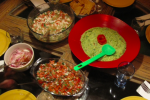 Daily feast.
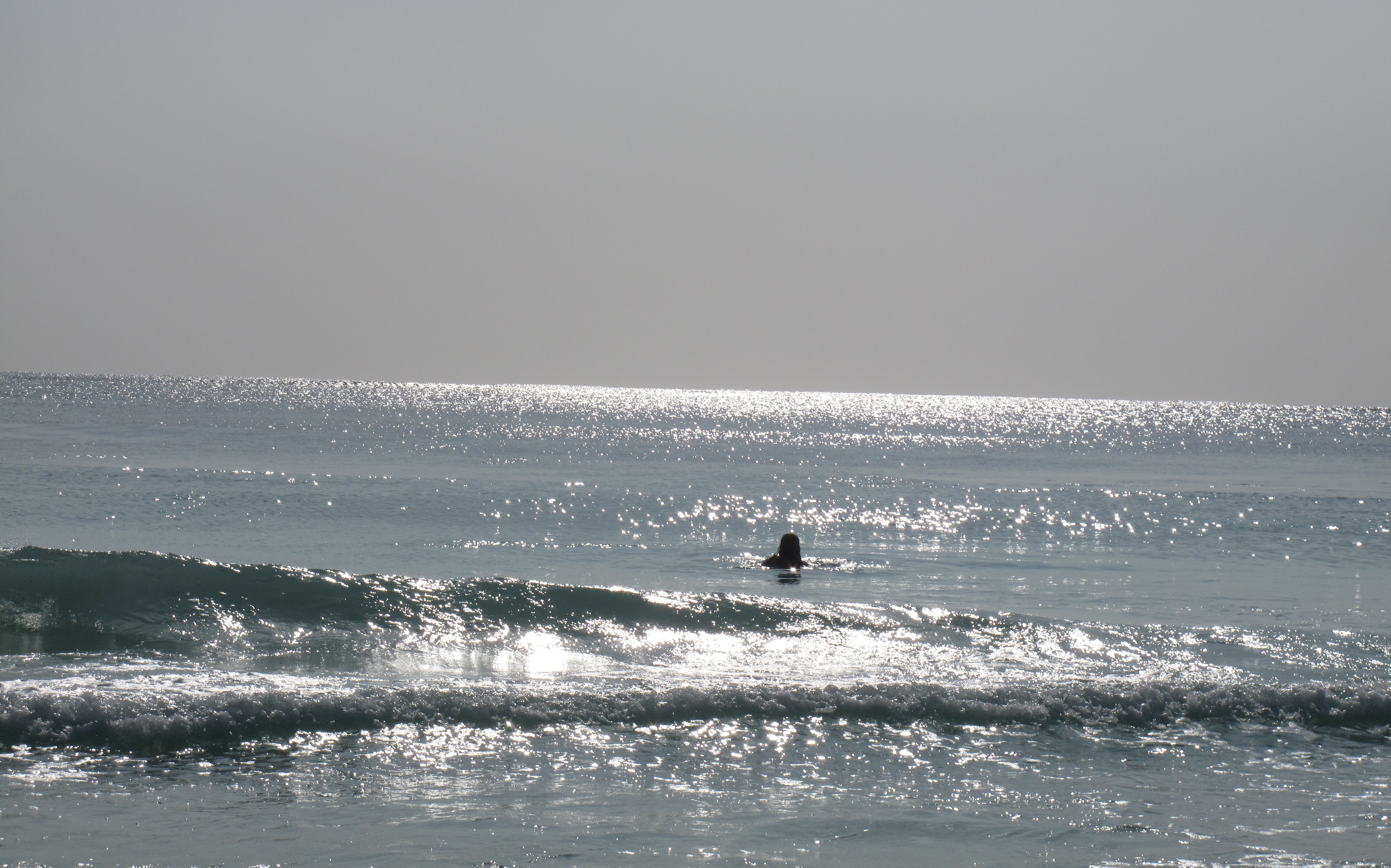
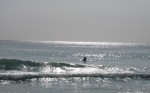 Playtime in between resting and sipping.
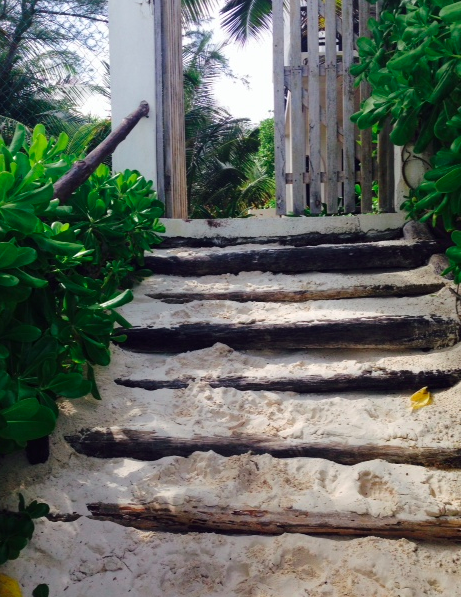
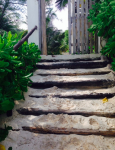 Hammock is up and to the right.

I’ve never written a post about food and wine pairing. Not going to start now.
But often I’m the bringer of libations, and when the gathering called for the odd combo of a pizza and sushi brunch, I pinged my wine community for some emotional support. It ended up a rapid-fire education, a veritable outpouring of favorites on a Facebook string some 50 comments long, with friends from down the block, to Finland, Sweden, Portugal, the UK…just about everywhere.
Amazing actually.
Articulate rules of thumb to be careful with the whites for fear of overwhelming the fish with too much acidity or stomping on the freshness of the pizza with too heavy tannins in the reds. A brilliant (but way over the top) lexicon of do’s and don’ts that suited each of the different types of toppings, from vegan to vegetarian to meat and tomato sauce.
A short discourse on sparkling sake as the penultimate sushi solution. A cultural reminder from my friends in Italy that they drink beer rather than wine with pizza.
And a veritable treasure trove of grapes and regions: each as the only possible solution, including Albarino, Bardolino, Chiaretto, Durello, Greco di Tufo and Vinho Verde. An articulate list of producers from Cos (his Rami white), endless great Rose´makers, Occhipinti (her Frapatto), Les Chais du Vieux Bourg Pinot Noir and even a Gannevat field blend.
Pure oenological concrete poetry to the wine enthused.
Wondrous silliness on the science of food pairing, as there may indeed be a science in here somewhere, but you are most likely to get it 95% right.
A great experiment nonetheless. I spent countless hours beyond the logic of the quest. And ended up doing what I honestly always do, which is follow my own inspiration to try something new-to-me, focus on the smallest and most natural producers I could find at the best value, and think mostly about the pleasure of the group I was pouring for.
Along with my wine network, a big thank you to my friends Ariana Rolich, Sophie Barrett and John Ritchie of Chambers Street Wines and Christy Frank of Frankly Wines for their patience and help as I made this quest a neighborhood event.
The final choices are in the picture above and the list below.
I bought twice what I needed, spent a delightful few hours pouring, talking about the wines and, at the end of it all, home made pizza (as expected) won the day. It satiated everyone’s expectation, was the takeaway memory, regardless of what was in the glass.
The wines:
Francois Pinon 2009 NV Vouvray Brut (Non Dosage)
This was the first bottle opened. It vanished immediately with ahs and ‘what is this?’ remarks. Creamy palate. A bit of crusty effervescence that spoke of raw honey and really pleasing acidity. At $21, organic with no added sugar (dosage), this bottle is a new friend and permanent part of my cooler.
I’ve opened three bottles of this since. Each one a firm reminder that sparkling is indeed a daily wine to begin any meal and most every conversation with friends.
Vigneto Saetti 2011 Lambrusco Salamino di S.Croce
This is nothing like any Lambrusco I’ve ever tasted. It’s actually unbubbly. Quite delicate. Deep red, almost black in color.
Drinking this bottle just makes you happy. Happy if you are just sipping it, or grabbing a piece of pizza. Happy if you are a wine geek, sitting back amazed that this has no added sulfur, is made from organic grapes and with natural refermentation in the bottle.
Luciano Saetti and the Salamino di Sante Croce grape are on my watch to try and try again. At $17 a bottle, too amazing.
COS 2011 Sicilia IGT Frappato
I couldn’t find the Rami white recommended (still looking), ignored the plea for the Occhipinti interpretation of this grape and went with Giusto’s Frappato. A long-term favorite of mine from the very Southeast corner of Sicily. A really beautiful wine, reminiscent of fresh fruit from an orchard’s tree, faintly floral, easy on the palate.
Perfection for under $30.
Bernhard Ott Reisling 2011 Feuresbunn Wagram Riesling vom Rotem Schotter
Ott’s Gruner Veltliners are not my favorite but this Riesling is astounding. So crisp. So focused and gravelly to the taste, it’s a fingerprint of unique taste that has a structure you can visualize. I’m a convert. This bottle ended up at my side, I nursed it through the meal and took the remainder home with me at the end of the evening (manners be damned!)
Biodynamic at less than $30 a bottle.
Regnie 2010 Ducroux Beaujolais
I pulled this one from my cooler at home as I’m a long-term fan of Domain Christian Ducroux. And an unabashed lover of Gamay as the perfect daily red. This bottle is just delicious, quaffable and satisfying, with an underlying interest that lasts on the palate. As natural as wine can get, no sulfur added.
All I can say is Thank You for such a bottle being made, and offer a head nod of disbelief that this and all of his vintages cost less than $15.
Eric Texier (Vignenvie) 2011 Vin de Table L’Anecdot’hic Rose
I’m a fan of Eric Texier and chose this bottle based more on intellectual curiosity than on anything else. It’s a field blend of 26 (so it is said) different varieties. Completely natural with an adherence to Fukuoka school of no intervention agriculture.
A low alcohol Rose´, a bit too acidic for some, but fresh and light and sprightly to my taste. Impossible to find usually. Beyond organic and $17 a bottle.
What a story this bottle of natural wine from the Jura tells…
It’s an inspired education in the detailed simplicity of biodynamic winemaking. And a cultural nod to the ancient tradition of field blends emphasizing the dominance of place over the individuality of the grape as the true signature of terroir.
The wonder of this wine is in its drinking pleasure. Round and fresh with a crisp mouth. Spicy red fruits, snappy tannins and a savory effervescence that is clean, alive and memorable. This is a rustic palate with natural crispness and uncannily refined.
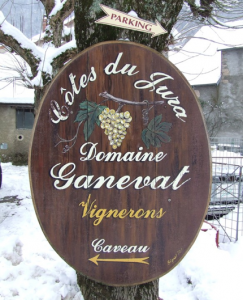
Jean-François Ganevat is the iconoclastic Jura winemaker responsible for this natural treat. His family has been vignerons in the area for generations. He’s been making wine at his family domaine since 1998.
I’m a student of the wines of the Jura, located in east central France in the foothills of the Alps. But Ganevat is the first winemaker I’ve focused on from the southern part of the region. His vineyard is in the tiny Hamlet of La Combe above the village of Rotalier.
In the Jura there are over 40 different grape varieties grown, most indigenous to the area and quite obscure, and many cultivated only in the Jura region itself. On Ganevat’s tiny vineyard, 17 of these 40 grape varietals are grown, sometimes vinified separately for his Poulsards and Savagnins, and in the case of J’en Veux, all 17 are harvested and vinified together as a field blend.
I was first introduced to field blends, known as Gemischter Satz in Austria by young and talented winemaker Gottfried Lamprecht from the Styria region. I tasted his crisply delicious Buchertberg White field blend in Vienna last year. Gottfried is a passionate believer that field blends are the truest expression of terroir.
Field blends emphasize the dominance of the place over the grape. Ganevat’s J’en Veux is a prime example of this. With J’en Veux you are literally tasting the Hamlet of La Comb not any of the individual varietals themselves.
Understanding the taste footprint of this bottle is less about the broad stroke of an organic or biodynamic approach– even though the vineyard is Demeter certified–more about the intense care and stewardship of the grape as the vessel of the vineyard itself.
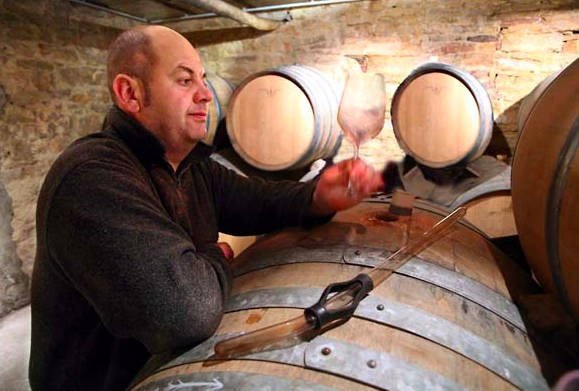
 J’en Veux is truly a handmade wine. Each grape is individually destemmed with a scissors, keeping every grape intact and unbruised. This maniacal attention to detail is painfully labor intensive with a 600-kg load of grapes taking 10 people a full day just to separate and remove the stems.
Add to this care, an extended elevage (aging) and a minimum of one year in tronconic (think cone-head shaped) wooden vats. Nothing is rushed. This is a gentle process with an eye towards creating a natural product that has time to discover itself.
J’en Veux has no sulphites added at all. While the wine is certainly ‘alive’ if you keep a bottle for a few days after opened, it is pure and and balanced and technically, quite perfect.
This is a wine of spring and summer. A chilled red with purity, natural crisp taste, refreshing, food friendly and alcohol light. When I shop for vegetables on an early Saturday morning at the Farmer’s Market, the fresh smells of the stalls makes me pine to cook and pair the food with a bottle of J’en Veux.
And this refreshing unique taste produced in a 100% natural way comes at a price of less than $30 a bottle.
Buy this if you can find it. Available at writing at Chambers Street Wines in TriBeCa, NYC.
Thanks to Sophie Barrett, Jura maven for recommending this bottle.
Photo credit to wineterroirs.
This year, I decided to forget about pairing with food and bring just great and interesting Organic wines to share. More tasting and information exchange than dinner planning.
I’m a big fan of natural wines. At their best, they each taste unique, are alive in the glass and speak to the story of place and grape and winemaker. I shortlisted wines from mostly old vines that oozed a sense of place with deep minerality and berried fruit. And are readily available for under $20!
Then I threw them in a very large sack and schlepped them to the assembled Waldstein clan on subway and bus from downtown NYC to Central Jersey.
In tasting order.
Cote-de-Beaune Rapet ’09 Bourgogne En Bully
Something easy and almost familiar to start with. A lite high-elevation French Pinot Noir with pure fruit to open up the palate and lighten up the atmosphere. Perfect opener. Lovely little aromatic fun Pinot. A crowd pleaser.
Olivier Cousin Le Cousin’09 Rouge Vielles Vignes Grolleau
Completely new to this group and to most of us. A really terrific Grolleau. And biodynamic as well. Tastes pure and rural and is reminiscent strangely of some Trousseau from Arbois. Unique. Almost effervescent.
Rich earthy dark berry taste from these 80 year-old Grolleau vines from the Loire Valley. A winner. The taste favorite.
Try this. It’s wonderful. I can guarantee that this one is being purchased this morning for holiday gifts.
Coudert (Clos de la Roilette) ’09 Fleurie Clos de la Roilette
Exceptional Beaujolais. From Fleurie and richer, deeper more layered than other Beujolais I’m familiar with. Mineral complexity that will get better as it ages although luscious today.
A great pairing with the meal even though that was not the overt intent. For $20, I put a case away for the holidays and ski vacations.
D. Ventura ’09 Viña do Burato
I’m a tireless fan of Ribeira Sacra and a follower of wine maker Ramon Losada. I brought this deep, concentrated and complex Mencia from 80 year-old wines from the terraces above the River Mino to satisfy the big red drinkers in the room.
Ramon is a rock star. He gets how to let the wine inherit the slate soils of Ribeira Sacra and portray a fresh honest vibrancy in a bold, medium bodied red. Great stuff with Turkey or just hanging around.
All the wines are available from Chambers Street Wines in TriBeCa in the store or online.
For my personal view on “Why drink organic wine?” you might check out this post.
Happy holidays to everyone and a special thanks to the team at Chambers Street Wines for introducing me to these and many more incredible organic wines.