Most people head to Mexico and drink Mojitas.
We mixed up a few, but for our annual family Spring Break in Tulum, it’s about wine and the natural best at that.
Tulum is all about being in the zone. Wonderful, refreshing and not-your-standard fare is the rule.
The setting:
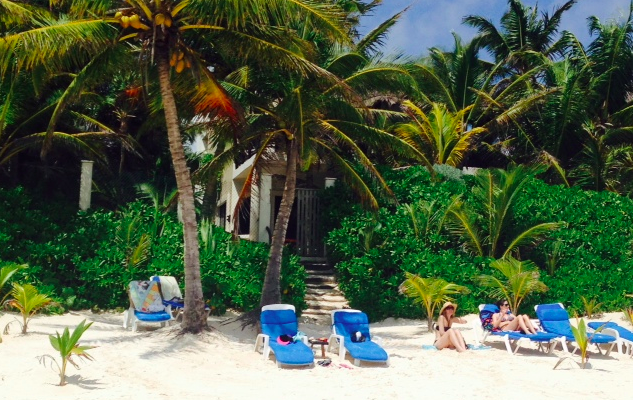 Hot and humid to the max. Hammocks under the palms. Fish and more fish on the grill. Tacos of every sort. Cerviche and guacamole every day.
Basically anything you can wrap in a banana leave and put in grilled flatbread.
The wine:
 Interesting is the rule. Delicious is the grade.
This year we nailed it. The most diverse and varied, the most economical and the most natural.
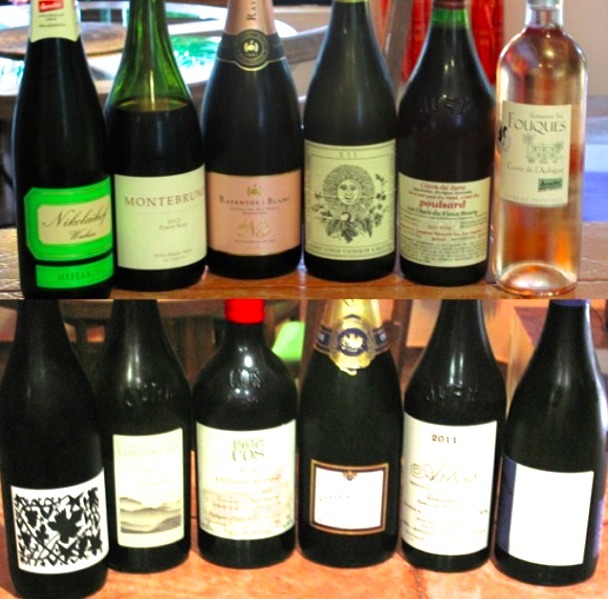
 Best twelve beach pack ever.
I’ll recap with an eye towards choices over time. They are all winners.
–>Three choices from the Jura
Evelyne and Pascal Clairet from Domaine de la Tournelle in Arbois stole the show with their 2010 Terre de Gryphées Chardonnay ($27). Those who say that the Jura is an acquired taste are just plain wrong.
This chard is as unique and terroir-expressive as it is delicious. Wine geek or no, this is a head nodder with undeniable satisfaction.
Second year running on the Poulsard side was Ludwig Bindernagel’s 2010 Les Chais du Vieux Bourg ($34). This German newcomer to the Jura just nails it. Light with a rich body, layered and lovely, a larger than life bouquet for such a delicate wine.
Puffeney made the cut this trip. His 2011 Les Berangeres Trousseau ($35) was the third Jura bottle. The family loved it. I found it a bit austere with a hard edge but quaffable nonetheless.
–>A touch of Sicily and anfora with Giusto Occhipinti’s COS Pithos
COS makes the trek yearly. The 2012 COS Pithos IGT ($31) Cerrasuolo Frappato/Nero D’Avola blend was as expected–delicious and unassuming.
Lightly chilled, delicate and satisfying are its hallmarks. Giusto is the first winemaker I ever tasted that fermented in Anfora and a personal hero and friend. This wine nails it in just about every category
–>Gruner from Nikolaihof is as good as it gets
I love this vineyard. Natural. Bio-D. Ancient. As crisp and unique a Gruner Veltliner as you can find. This year (the third appearance of Nikolaihof) we switched to the 2012 Hefeabzug Gruner Veltliner ($25). A winner.
–>More bubbles make the cut
Bubbles are an occasion in their own right. Two bottles made the trip with us.
The first Cava to cross the border was the 2011 Raventos i Blanc de Nit Rose Brut Conca Del Riu Anoia ($22). Elegant, smokey citrus from the Monastrell grape. We had it with a breakfast/brunch on the first morning. Yum!
The Filaine NV Brut ler Cru Damery Cuvee Speciale ($49) was the priciest of the bottles and a special treat. Creamy and classical. A Pinot Noir/ Chardonnay/ Pinot Meunier blend of 2009 and 2010 grapes was oh so ripe and finely moused and bubbly crisp. This was brought for a birthday and it crushed expectations.
–>A bit of Alpine Savoie at the Mexican seaside
I’ve fallen hard to this region, the producers and varietals. I could have brought a half case of just these whites.
I tasted with Gonon recently and his 2012 Vin de France Chasselas Vieilles Vignes ($25) is well—a dream. Subtle and herbal with smacks of fruit. I so love this bottle. So did everyone.
I’m a long-term Belluard fan. His 2012 Grandes Jorasses Altesse ($34) is fresh, mineral, crips, light and delicious. I had sent this bottle as presents earlier in the year. It’s a family tradition already.
Next to the Jura–in fact Savoie is Jura adjacent–this is fast becoming my favorite region.
–>New world naturalists make the trip
A first for this vacations–an Oregon Pinot Noir and a California Grenache/Mourvedre blend.
I tasted the 2009 Montebruno Eola-Amity Hills Pinot Noir ($25) with the winemaker Joe Pedicini earlier in the year. Bio-D, a light effervescence and deep flavor are its traits. Served lightly chilled in water glasses on the terrace overlooking the sea was a crowd pleaser.
Hank Beckmyer from La Clarine Farms is a favorite of mine for the brilliance and ease of his wines. A Grenache and Morvedre blend at km 9.2 in Tulum? I say, hell yes!
The 2012 Sierra Josephine & Mariposa ($25) is a beautifully balanced and structured, tannin-laden bottle. I did chill it slightly and with some home made Quesadillas and Cerviche, it was a killer.
Not a hint of sulfur added in these. Not a touch of funk. Freaking lovely natural wines!
–>Wrapping up with a Cotes de Provence Rose
From the selections of my friend David Lillie was a Les Fouques 2012 Aubigue Rose ($13!).
This blend of Cinsault, Grenache, Syrah, Cabernet Sauvignon, is almost pale white, shot with pepper, light on the palate, dreamy on the nose and perfect on the hammock.
Small producers all.
These wines are very small productions and go in and out of stock. Some are available at Chambers Street Wines and online through other small specialty shops. Shop the producer if not the vintage.
I will wager a free bottle on me for long-term readers that these will delight.
A thank you to my friends Sophie Barrett and Ariana Rolich of Chambers Street Wines for making the process of choosing almost equal to the drinking.
Some photos to capture the joy of this place along with the wine.
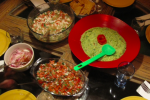 Daily feast.
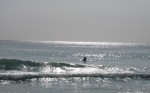 Playtime in between resting and sipping.
 Hammock is up and to the right.

I’ve never written a post about food and wine pairing. Not going to start now.
But often I’m the bringer of libations, and when the gathering called for the odd combo of a pizza and sushi brunch, I pinged my wine community for some emotional support. It ended up a rapid-fire education, a veritable outpouring of favorites on a Facebook string some 50 comments long, with friends from down the block, to Finland, Sweden, Portugal, the UK…just about everywhere.
Amazing actually.
Articulate rules of thumb to be careful with the whites for fear of overwhelming the fish with too much acidity or stomping on the freshness of the pizza with too heavy tannins in the reds. A brilliant (but way over the top) lexicon of do’s and don’ts that suited each of the different types of toppings, from vegan to vegetarian to meat and tomato sauce.
A short discourse on sparkling sake as the penultimate sushi solution. A cultural reminder from my friends in Italy that they drink beer rather than wine with pizza.
And a veritable treasure trove of grapes and regions: each as the only possible solution, including Albarino, Bardolino, Chiaretto, Durello, Greco di Tufo and Vinho Verde. An articulate list of producers from Cos (his Rami white), endless great Rose´makers, Occhipinti (her Frapatto), Les Chais du Vieux Bourg Pinot Noir and even a Gannevat field blend.
Pure oenological concrete poetry to the wine enthused.
Wondrous silliness on the science of food pairing, as there may indeed be a science in here somewhere, but you are most likely to get it 95% right.
A great experiment nonetheless. I spent countless hours beyond the logic of the quest. And ended up doing what I honestly always do, which is follow my own inspiration to try something new-to-me, focus on the smallest and most natural producers I could find at the best value, and think mostly about the pleasure of the group I was pouring for.
Along with my wine network, a big thank you to my friends Ariana Rolich, Sophie Barrett and John Ritchie of Chambers Street Wines and Christy Frank of Frankly Wines for their patience and help as I made this quest a neighborhood event.
The final choices are in the picture above and the list below.
I bought twice what I needed, spent a delightful few hours pouring, talking about the wines and, at the end of it all, home made pizza (as expected) won the day. It satiated everyone’s expectation, was the takeaway memory, regardless of what was in the glass.
The wines:
Francois Pinon 2009 NV Vouvray Brut (Non Dosage)
This was the first bottle opened. It vanished immediately with ahs and ‘what is this?’ remarks. Creamy palate. A bit of crusty effervescence that spoke of raw honey and really pleasing acidity. At $21, organic with no added sugar (dosage), this bottle is a new friend and permanent part of my cooler.
I’ve opened three bottles of this since. Each one a firm reminder that sparkling is indeed a daily wine to begin any meal and most every conversation with friends.
Vigneto Saetti 2011 Lambrusco Salamino di S.Croce
This is nothing like any Lambrusco I’ve ever tasted. It’s actually unbubbly. Quite delicate. Deep red, almost black in color.
Drinking this bottle just makes you happy. Happy if you are just sipping it, or grabbing a piece of pizza. Happy if you are a wine geek, sitting back amazed that this has no added sulfur, is made from organic grapes and with natural refermentation in the bottle.
Luciano Saetti and the Salamino di Sante Croce grape are on my watch to try and try again. At $17 a bottle, too amazing.
COS 2011 Sicilia IGT Frappato
I couldn’t find the Rami white recommended (still looking), ignored the plea for the Occhipinti interpretation of this grape and went with Giusto’s Frappato. A long-term favorite of mine from the very Southeast corner of Sicily. A really beautiful wine, reminiscent of fresh fruit from an orchard’s tree, faintly floral, easy on the palate.
Perfection for under $30.
Bernhard Ott Reisling 2011 Feuresbunn Wagram Riesling vom Rotem Schotter
Ott’s Gruner Veltliners are not my favorite but this Riesling is astounding. So crisp. So focused and gravelly to the taste, it’s a fingerprint of unique taste that has a structure you can visualize. I’m a convert. This bottle ended up at my side, I nursed it through the meal and took the remainder home with me at the end of the evening (manners be damned!)
Biodynamic at less than $30 a bottle.
Regnie 2010 Ducroux Beaujolais
I pulled this one from my cooler at home as I’m a long-term fan of Domain Christian Ducroux. And an unabashed lover of Gamay as the perfect daily red. This bottle is just delicious, quaffable and satisfying, with an underlying interest that lasts on the palate. As natural as wine can get, no sulfur added.
All I can say is Thank You for such a bottle being made, and offer a head nod of disbelief that this and all of his vintages cost less than $15.
Eric Texier (Vignenvie) 2011 Vin de Table L’Anecdot’hic Rose
I’m a fan of Eric Texier and chose this bottle based more on intellectual curiosity than on anything else. It’s a field blend of 26 (so it is said) different varieties. Completely natural with an adherence to Fukuoka school of no intervention agriculture.
A low alcohol Rose´, a bit too acidic for some, but fresh and light and sprightly to my taste. Impossible to find usually. Beyond organic and $17 a bottle.
Natural wine is a simple yet powerful idea.
It’s the belief that an organic and non-interventionist approach to winemaking can create wine that expresses terroir in a truer fashion, is more interesting to the palate, more complimentary with food and, of course, healthier for the individual and the environment.
2011 was about figuring out whether this really rung true to me.
Whether this is a niche of consequence as well as interest. Whether when orchestrated in the hands of a master winemaker, it creates a product of quality as well as uniqueness. And whether we are entering an era where the economics of the artisanal winemaker combined with the reach of the web is a possible disruptor and game changer for the wine world.
Natural wine has been a passion of mine for a while now and this blog is an homage to the winemakers I respect the most.
Friends and neighbors are hard pressed to escape the tastings and stream of stories about the flavors and bouquets of Trousseaus and Poulsards from the magical vineyards of the Jura. The rich and layered Mencias and Garnachas produced from the ancient terraces hanging over the River Sil in Ribiera Sacra. The Frappatos and Nero D’Avolas grown in volcanic ash on the smoky slopes of Mt Etna in Sicily.
These deep natural pockets of organic and biodynamic winemaking, in 2011, became part of a much longer list of true natural winemaking legends in Friuli, Beaujolais, Manchuela, the Canary Islands, Champagne, the Loire Valley…everywhere they make wine.
There is always a short list of the best of the best, but this approach to winemaking has not only been happening quietly for generations in every winemaking region but is part of a global renaissance of a non-interventionist approach to making natural wine.
There are many like Jean Bourdy in the Jura who have been making wine on their family farms for scores of generations. And many more in areas like Ribeira Sacra, who are returning to ancestral terraces, cut by the Romans 2000 years ago, tended for generations then abandoned till just now.
But most important to me this year was getting to know a few of these winemakers as real people. My visits with Friulian iconoclast Fulvio Bressan especially in Trieste and Sandi Skerk in Carso were wildly exhilarating and provoking.
Attending tastings with natural wine rock stars like Philippe Bornard, Jean Bourdy Luis Rodriguez and Eric Texier was to understand the passion and humility of these individuals. They eschewed labels to a person yet spoke their own individual language that in concept, was common across all of them. These are individuals driven by intense emotions and their success is attributable to drive, self-belief and extraordinary skill.
The validity of natural winemaking doesn’t lie with its definition.
Artisanal, organic, biodynamic, sustainable and natural all bump into each other as parts of a new way of looking at an ancient tradition of winemaking. To some it’s tradition carried forth. To some a revolution of change. None of this speaks to quality but it does speak to a promise and an approach.
I wasted too much time this year arguing with wine journalists jockeying for definition and defensive of their own roles as taste makers in the hard-wired reality of the wine world today.
Labels on bottles are important certainly. Certification as assurance of credibility is critical. But these labels and certifications don’t create the reality, they codify it.
Our local shops and specialty importers are doing this job now, and well. Over time, this will move online and the category of natural or artisanal will be a first door on a search or referral funnel to finding what you like under this general contextual umbrella.
The response from the industry to the categories of natural and biodynamic is a bit too shrill to ignore. The percent of grapes grown organically or biodynamically is really small. The same with the overall revenue numbers of what is sold under this broad definition.
So…what’s going on?
Can a farmer like Christian Ducroux making wondrous no sulfer-added, 100% natural Beaujolais on his tiny 4-hectare vineyard on the hillside above the village of Regni-Durette in France really threaten the wine world?
Stangely, I think so.
Although Ducroux makes delicious wine of the highest quality, he does so in the most petite of vineyards, off the economic grid mostly with a lifestyle intent.
While there are huge variations in the definition of what constitutes natural—chaptalization, natural yeasts, filtration, sulfur not to mention vineyard practices–really wonderful wine that truly is an expression of terroir can be the result. When it’s in a goblet swirling rhythmically, it’s superfood for the soul, enthralling with bouquet, smile inducing and head nodding satisfaction when it all comes together.
This is where this gets interesting.
The most low tech (no tech actually), natural approach to making wondrous wine is being made possible as business reality and a consumer connection by a platform of technical sophistication never before available.
The culture of the consumer has shifted on a global basis. It is not the exception to be eco-aware, health conscious, artisan supportive and curiously adventurous in seeking out new places, foods, cultures, people…and wine.
The social web has established the reality of the global local and the power of the niche to stand alone or as part of a marketplace. It has empowered the consumer, democratized information and distribution for industry after industry. It was made real the possibilities of marketplaces and given voice and commercial weight to the niche, the authentic and the unique.
I’ve blogged often about the wave of change that is sweeping our culture on how we find, purchase and consume our passions. Natural wine, defined as you will, artisanal at its very core, is part of this.
As I write this I’m sipping a truly wonderful glass of organic Malvasia from the Skerk Vineyard in Carso, Friuli, Italy. So rich and refreshing. Mineral. Vivacious. From Sandi’s cellar to my goblet. From my blog to your intent to taste I hope.
And I’m thinking of the old adage that says that the future is already here. It’s just a secret that only a few have discovered it.
To me, it’s already here and I’m living it.
Call it natural. Call it artisanal. Call it organic.
The market will decide but the connection between me in NYC and Sandi Skerk in Carso is quite real and tangible. I may have been attracted to Skerk because of his indigenous varietals, his natural approach and the magnificence of his cellar. But at the end of this string of filters, of categories, is the taste that binds.
This is a new culture of consumers demanding that the systems of discovery and distribution fit themselves to their wants. The wines are scattered in interesting pocket across the globe. The market, certainly in the states, is here.
The value chain between winemaker and consumer for natural wines is already present, like breadcrumbs scattered about. There is only that handshake between personal discovery and seamless commerce that is still wanting. And in my view, not for long.
The Occhipintis, Guisto at Cos Vineyards and Arianna at Occhipinti Vineyards are my favorite Southern Sicilian wine makers. Whether Nero D’Avola, Frappato, Cerasuola or blends, this family has the taste of place and challenges my view of Sicilian wine making. All vineyards are biodynamic and their creative blending of old and new and wildly unusual, organic and standard techniques are keeping our palates guessing.
SP68 from Occhipinti is Nero D’Avola and Frappato, labeled as a blend rather than a Cerasuola, I’m presuming, as it doesn’t meet DOCG rules, for 60/40 Nero D’Avola/Frappato. This wine may not meet DOCG classifications but it is ever so naturally rich and manages to couple complexity with a fun and easy-to-drink palate.
Arianna has challenged us with organic tastes and unusual twists to traditional techniques but this vintage, while biodynamic, is more about taste, less about technique and just a great drinking wine. SP68, named after a highway near the vineyard, tastes pure and crisp and focused and dismisses any notion that Sicily is a lesser cousin of either Tuscany or Piedmont.
At $21.99 a bottle from Chambers Street Wines, this seems almost too little for this balanced, ruby red delight with a finish that just won’t stop. This is a steal and a must try.
(more…)
Guisto Occhipinti, the proprietor at the Cos vineyard, along with his niece, Arianna at the Occhipinti Vineyards are redefining winemaking from Southeastern Sicily for this wine blogger.
Interestingly, they are making something brand new to the palate by reaching back to pure organic wine making, both in the vineyard and the winery—biodynamic farming, no commercial yeasts and little to no sulfites. They are creating something new and individual by perfecting something old and natural with their personal stamp. Kind of like traditional terroir meets organic meets cult winemakers who dance to their own great taste.
Cerasuola di Vittoria Pithos adds another dimension to the already remarkable Nero D’Avola/Frappato blend that the vineyard produces. This bottling is fermented in anfora from Greece and I must admit…anfora?… I didn’t even know what it was.
Here’s the short and interesting story. Wine was born when there was a way to control oxygen during the fermentation process. And clay containers were invented about 6000 years ago. 4500 years ago in Europe (Greece) where anfora was used to make containers for fermentation and bottles for storage. Kind of cool, folks could make wine when they figured out how to make clay pots. So when you go to a museum and see old clay things, they were already enjoying a good glass of wine ☺
Cerasuala di Vittoria Pithos is fermented in anfora pots. Alcohol is created in these natural porous containers buried in the ground to control the temperature during the first fermentation. And yes, you can taste the earthiness and wildness here.
This organic blend of 60 percent Nero D’Avola, 40 percent Frappato is complex, luscious and elegant with a hint of something different that I’m honestly unable to describe. Maybe it’s the clay. Maybe it’s the volcanic minerality of this high elevation, sea-cooled area. Maybe it’s the unfamiliar pleasantness of an organic wine. I can of course, taste the Nero D’Avola and the Frappato but they’ve become something new.
I love this bottle. Period. It pleases my taste, it challenges my palate and it stimulates me intellectually to try and understand it.
Chamber Street Wines is selling this at $40 a bottle.
Try this wine, both with and without anfora, and try the Occhipinti Nero D’Avola and Frappato vintages. They are a holiday present to all of us.


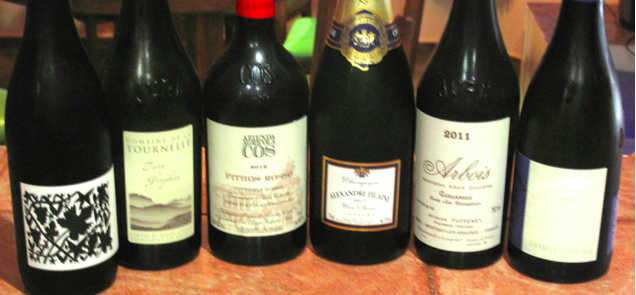 Interesting is the rule. Delicious is the grade.
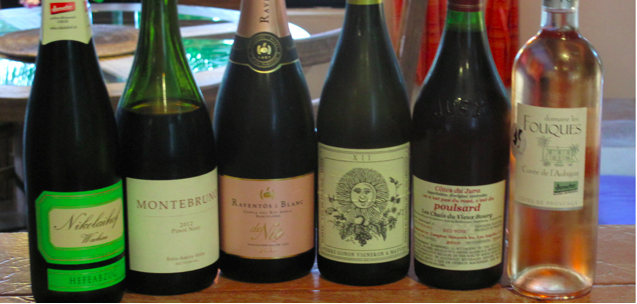 Best twelve beach pack ever.
 Daily feast.
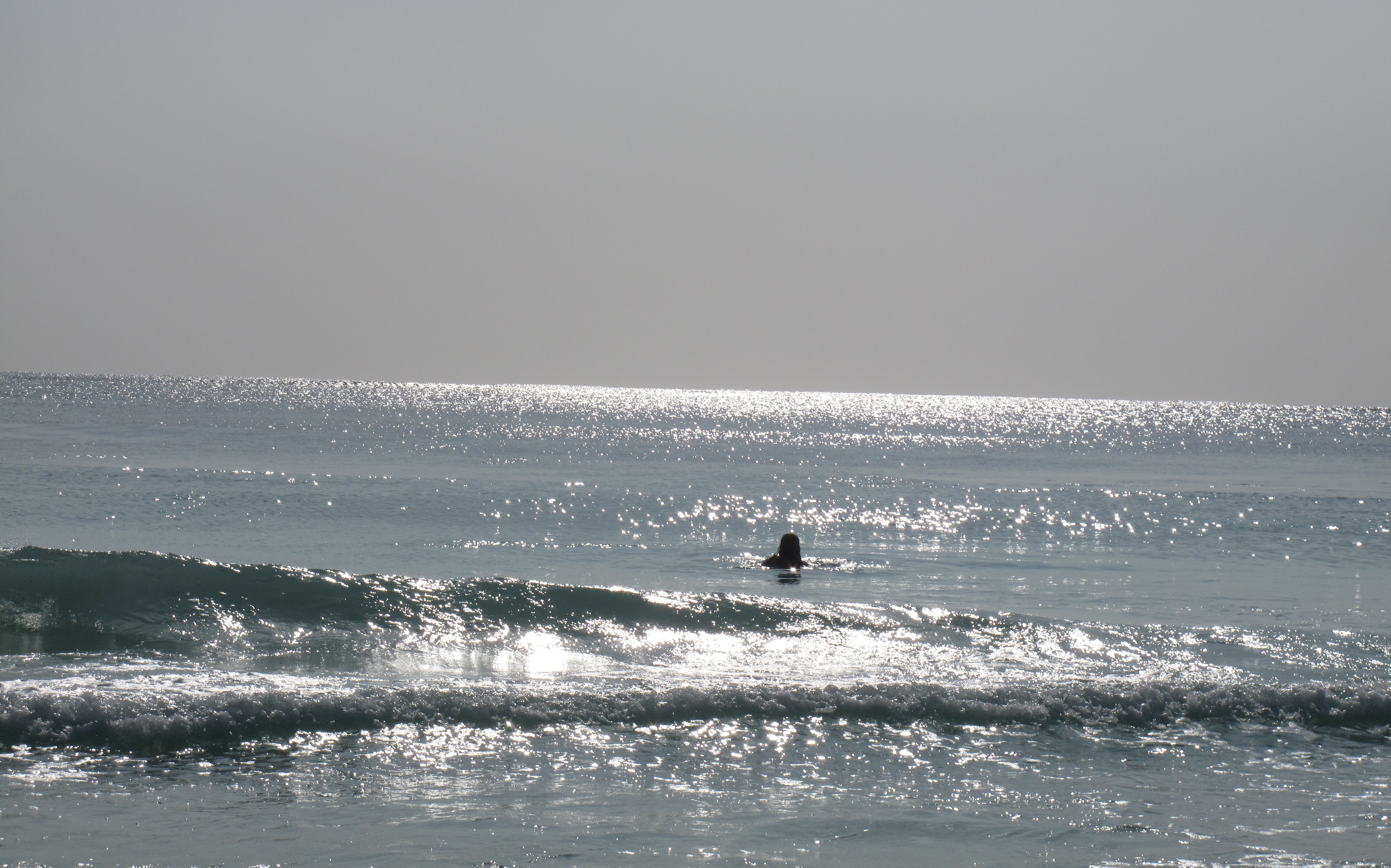 Playtime in between resting and sipping.
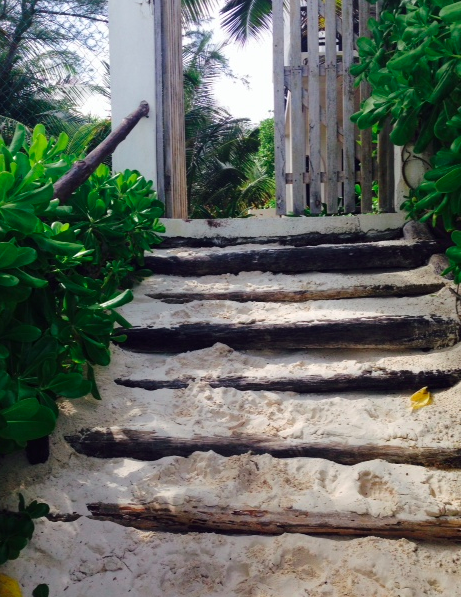 Hammock is up and to the right.